Stained Glass Explained: Opalescent, Iridescent, Mottled, Goldstone, Fracture and Bubble Sheets
Tiffany lamps, church windows and decorative panels all start with the same decision: which stained glass effect family to specify. This guide compares the seven color-effect families we supply and how to buy them for export production.

- True stained glass gets its color from metal oxides in the molten batch — the tone runs through the body of the sheet and cannot fade, chip or scratch off like coated glass.
- The seven effect families — opalescent, cathedral (transparent), iridescent, mottled, goldstone, fracture and bubble — each solve a different design problem: opacity, light transmission, sheen, movement or sparkle.
- Our sheets are a consistent 2–3 mm, score and cut cleanly on standard equipment, and are available in more than 60 colors across opalescent, cathedral, textured and water-glass surfaces.
- For large panels, grain and texture can be matched across sheets so one window or lampshade reads as a single composition.
- Sheets ship flat with interleaved paper in seaworthy crates — the same export packing we use for mirror and float glass.
What “Stained Glass” Actually Means in the Trade
In industrial terms, stained glass is colored sheet glass made by adding metal oxides to the molten batch: cobalt for blues, selenium and cadmium for reds and oranges, iron and chromium for greens, manganese for purples. Because the color is in the glass itself — not a film, paint or laminate — the tone runs through the full thickness of the sheet and survives decades of sunlight without fading.
This is what separates stained glass from painted or filmed decorative glass. A coating sits on the surface and can scratch; a colored body cannot. It is also why stained glass looks equally alive whether you view it in reflection or backlit by the sun — the color is the material, not a layer on it.
The range we supply covers stained glass in more than 60 colors and four surface families — opalescent, cathedral (transparent), textured and water-glass — all cast as a consistent 2–3 mm sheet that scores and breaks cleanly on standard cutting equipment.
The Seven Effect Families at a Glance
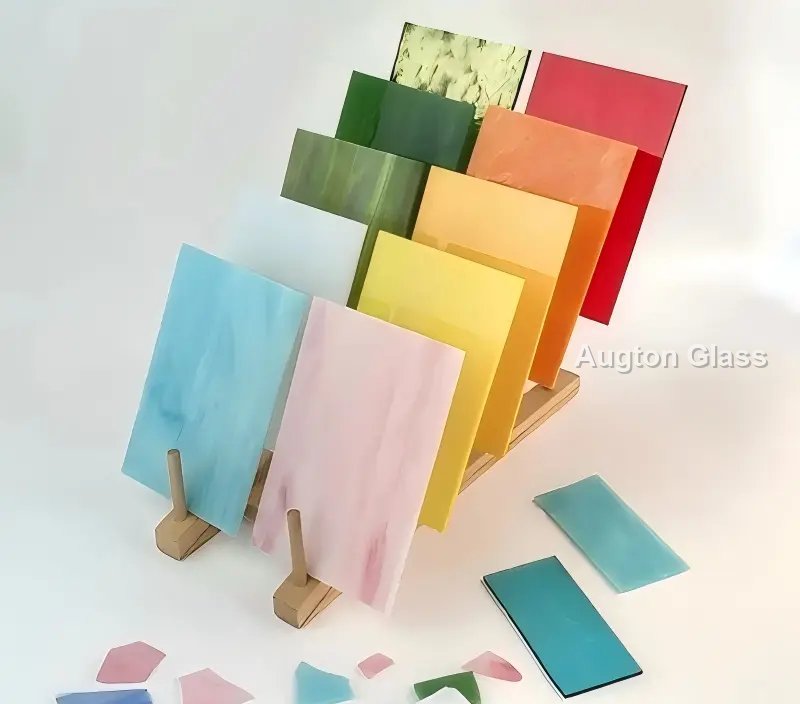
Buyers rarely need “stained glass” in the abstract — they need the right effect for a specific design. These are the families we produce and where each one earns its place:
| Family | What you see | Best known for |
|---|---|---|
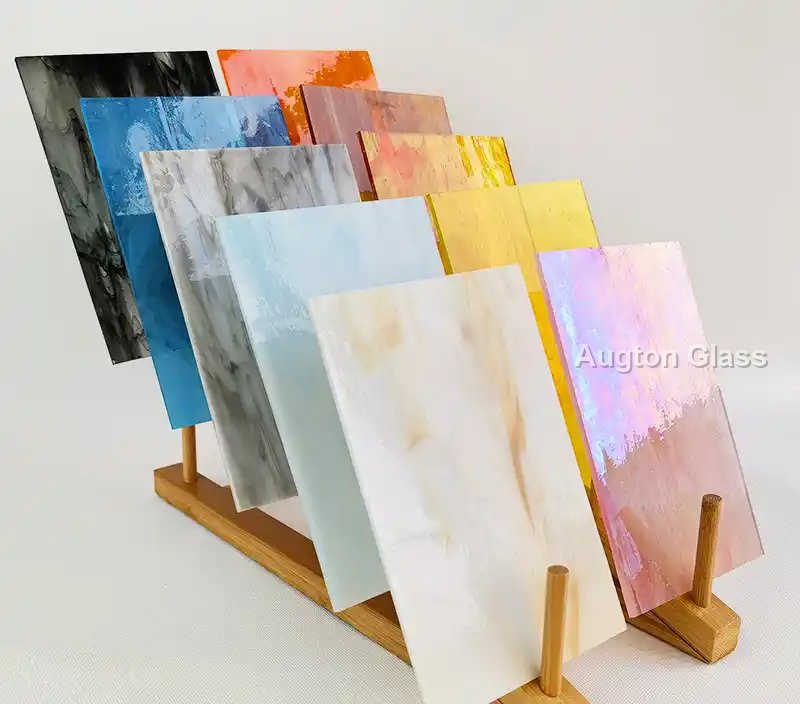
| Opalescent | Milky, multi-tone body; semi-opaque | Tiffany lampshades, church windows |
| Cathedral / transparent | Clear through-body color that glows when backlit | Traditional windows, suncatchers |
| Iridescent | Pearlescent sheen that shifts with viewing angle | Lamps, suncatchers, feature panels |
| Mottled | Marbleized swirls of two or more colors | Organic Tiffany work, lamp crowns |
| Goldstone | Deep color with sparkling copper aventurine flecks | Prestige lamps, jewel-like accents |
| Fracture | Multicolor confetti chips fused to the sheet | Confetti and terrazzo effects |
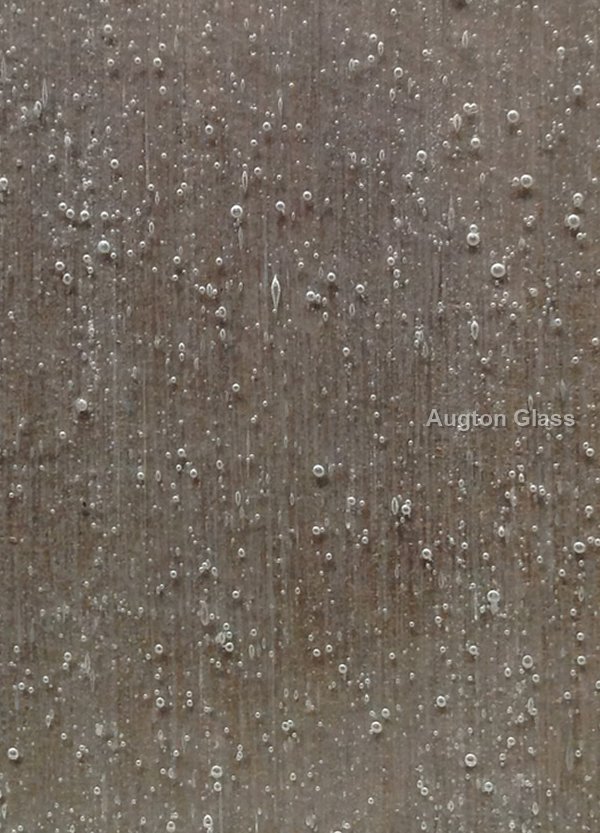
| Bubble | Controlled air bubbles suspended in color | Sparkling lamp panels, windows |
Opalescent Glass: The Tiffany Classic
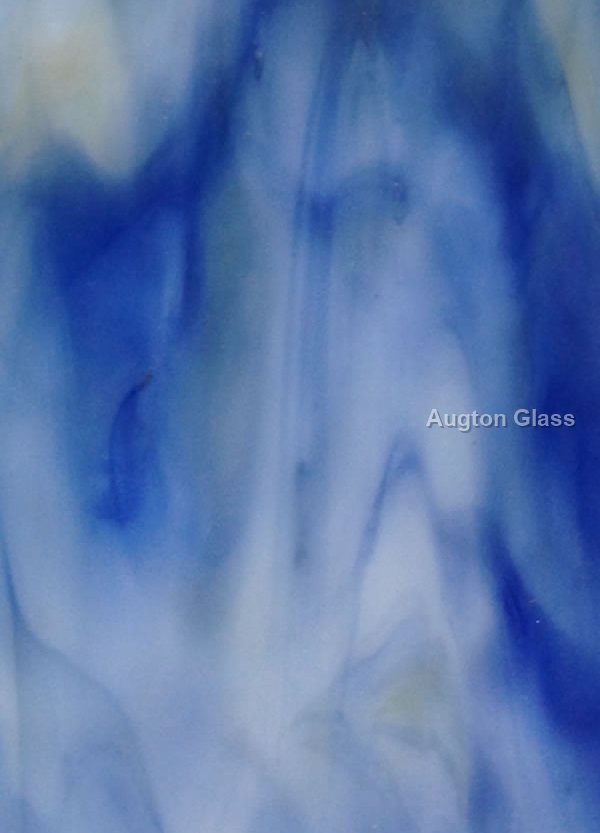
Opalescent glass mixes milky white opacity with through-body color, produced by re-heating the sheet surface so opacifying crystals form in the outer layers. The result is the soft, dimensional look that defines classic Tiffany lampshades: light passes through a few millimeters of glowing color instead of streaming straight through, and the sheet reads almost like carved stone in reflected light.
Because opalescent glass is semi-opaque, it hides what is behind it — ideal for lampshades where you do not want the bulb and internal structure visible, and for privacy panels where you want color without transparency. Multi-tone opalescents (a green-blue swirl, for example) give lamp artists shading variation within a single sheet.
For buyers assembling lampshades, the practical requirement is opalescent glass that cuts cleanly and delivers the same tone across an order — that is what our batch control and sheet-to-sheet grain matching are for.

Iridescent, Mottled and Goldstone: Three Ways to Add Light Play
Iridescent glass starts as colored sheet and receives a micro-thin metallic surface treatment that splits light the way a soap bubble does: the sheet shifts hue as the viewer moves. It reads especially well on lampshades and suncatchers, where changing angles are constant. The sheen is on the surface, so we recommend specifying it on faces that are not exposed to abrasion.
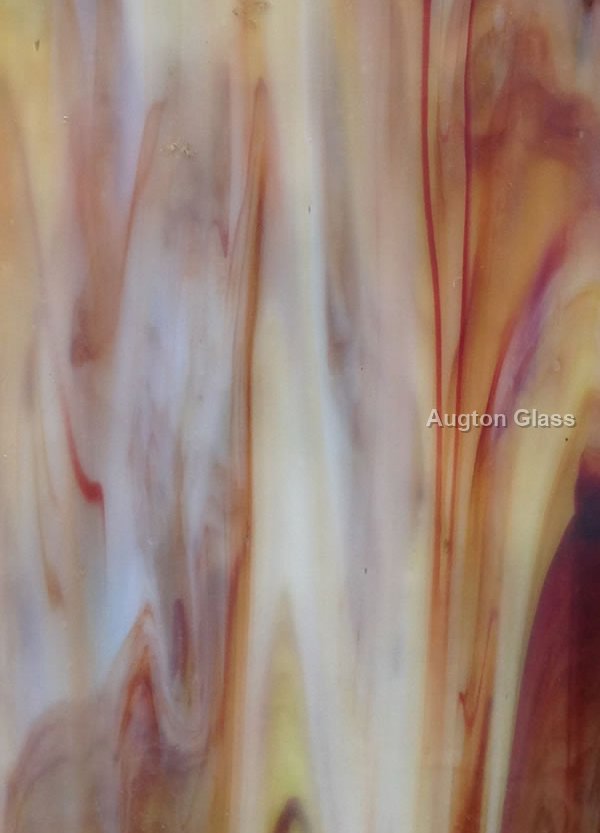
Mottled glass is the opposite approach — all its drama is in the body. Two or more colors are swirled together while molten, creating marbleized patterns where no two sheets are alike. Designers use it precisely for that variation: a lamp crown or feature window built from one batch feels organic and hand-made.
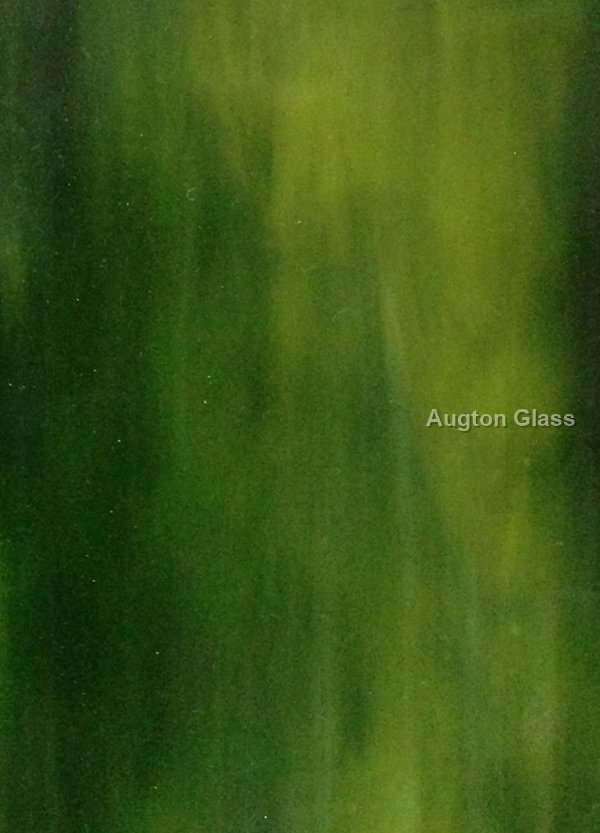
Goldstone glass suspends copper aventurine crystals — thousands of microscopic glittering flecks — inside deep green or other dense color. It is the most jewel-like sheet in the range and is usually reserved for accent pieces and prestige lamp sections where a small area carries a lot of visual weight.
Fracture and Bubble: Movement Inside the Sheet
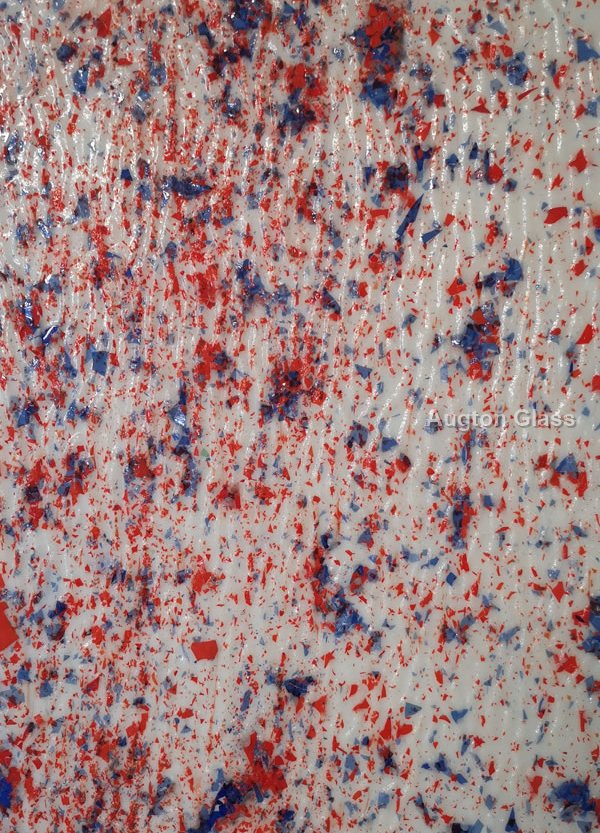
Fracture glass fuses multicolored chips onto a clear or opalescent base while the sheet is hot, freezing a confetti or terrazzo pattern into the body. Because the chips are fused rather than glued, they cannot lift or discolor, and the sheet remains a single 2–3 mm piece that cuts like any other stained glass.
Bubble glass traps controlled air bubbles inside through-colored sheets. The bubbles catch backlight and sparkle — a small burst of light in every pane. Bubble size and density are controlled at production, so a lampshade made from one order reads consistently rather than randomly.
Both families exist for the same reason: to add motion and sparkle without any added assembly work. A fracture glass or bubble glass panel delivers decoration that would otherwise require fusing, glue-chip etching or hand-painting in the workshop.
Sheet Format: Thickness, Sizes and Cutting Behavior
Our stained glass sheets are produced at a consistent 2–3 mm — the thickness the entire Tiffany and lamp-making supply chain is built around. The sheets score cleanly with standard carbide wheels, break without shell chipping, and grind smoothly for copper-foil work.
Sheet sizes and colorways are matched to your cartoon (the full-size drawing every lamp or window is built from). For large panels we match grain direction and texture across sheets, so adjacent pieces flow into each other instead of clashing. Color samples are supplied against our reference cards before production, and batch consistency is checked against those samples at packing.
If your workshop cuts by hand, tell us the skill level involved — some opalescent and textured surfaces are more forgiving than others, and we will steer you to the right surface family for clean production yields.
Specifying by End Use: Lamps, Windows and Panels
Lampshades — the classic Tiffany use — lean on opalescent, mottled, iridescent and stipple surfaces, because the design goal is soft internal glow with dimensional color. A single shade routinely mixes five or more effect families, which is why buying from one mill with a wide color range keeps the palette coherent.
Church and feature windows traditionally use cathedral (transparent) glass for large fields, with opalescent and mottled accents for drapery, foliage and sky. Backlighting is the whole point: transparent sheets glow at full saturation, while opalescent sections create depth and shadow.
Decorative interior panels — room dividers, cabinet inserts, restaurant features — usually combine transparent textured sheets for light transmission with opalescent accents for opacity where the background is unattractive. If the design brief says “decorative but bright”, start with transparent textured glass and add color accents from the effect families above.
Packing and Shipping Sheet Glass for Export
Stained glass sheets ship flat, interleaved with paper, in seaworthy wooden crates — the same discipline we apply to mirror and float glass exports. Sheets are packed by color family with padding between the last sheet and the crate wall, and each crate is marked with color codes so your workshop can unpack directly onto the cutting bench.
Because 2–3 mm sheet is thin, the biggest transit risk is edge damage, not breakage through the face. Our crates separate sheets with edge protection and keep stacks short enough that no sheet bears a heavy load. Orders are container-optimized so crates sit upright and braced for the full voyage.
For mixed orders — say, sheets plus glass table tops or mirror — we pack stained sheets in their own crates rather than combining them with heavier stock, so one product never loads another.
How Buyers Order: From Color Card to Container
The normal workflow is simple: you send your cartoon, bill of materials or a photo of the target design; we quote by sheet and by color family against our 60+ color reference; you approve physical color samples; then we cut, pack and ship to your workshop schedule.
Lead time depends on color depth and effect family — standard cathedral and opalescent colors move fastest, while goldstone and iridescent batches run on longer production cycles. Tell us the project deadline at inquiry stage and we will confirm which families can meet it.
If you are building a product line rather than a one-off project, we also supply recurring standing orders with locked color batches, so lampshades produced this quarter match the ones you sold last season. See also our companion guide to textured and transparent stained glass for the privacy-and-light side of the range.
Frequently Asked Questions
Will the color of stained glass fade in sunlight?
No. The color comes from metal oxides inside the glass body, not a surface coating. Decades of direct sun will not bleach a through-colored sheet — which is exactly why century-old church windows still glow.
What thickness are the sheets?
A consistent 2–3 mm — the standard for Tiffany and lamp work. The sheets score and break cleanly with standard carbide cutting wheels and grind smoothly for copper foil.
Can I get a specific color matched to a sample?
Yes. Send the physical sample or a photo of the target design; we quote against our 60+ color reference and supply physical color chips for approval before production.
Will every mottled sheet look the same?
No — mottled glass is marbleized precisely so that no two sheets are identical. What we guarantee is the same color palette and swirl character within a batch, and grain matching across sheets used in one panel.
Which family should I use for a Tiffany lampshade?
Most shades combine families: opalescent for the body, mottled or iridescent for crowns and accents, goldstone or bubble for sparkle points. Send the cartoon and we will map each section to the right family.
Is iridescent coating durable enough for exterior use?
The iridescent sheen is a micro-thin surface treatment. It performs beautifully on lamps, suncatchers and interior panels; for exterior installations we recommend transparent or opalescent body-colored glass instead.
How are sheets packed for sea freight?
Flat, paper-interleaved, in seaworthy crates with edge protection — packed by color family and coded so your workshop can unpack straight onto the cutting bench.
Do you sell full sheets only, or cut-to-size pieces?
Both. We supply full sheets for workshops that cut their own, and cut-to-size pieces matched to your cartoon for assemblers who want panels ready for foil or lead came.
The Bottom Line
Send your cartoon, color references or target photos — we will return a stained glass sheet quotation by color family, with physical samples before production.
Request a Quote →