Textured and Transparent Stained Glass: Cathedral, Water-Glass and Stipple Surfaces Compared
Texture decides how a colored sheet handles light: cathedral glass glows, water-glass moves, stipple diffuses. Here is how to pick the right surface for windows, lamps and privacy panels — with the transparency ladder buyers actually use.
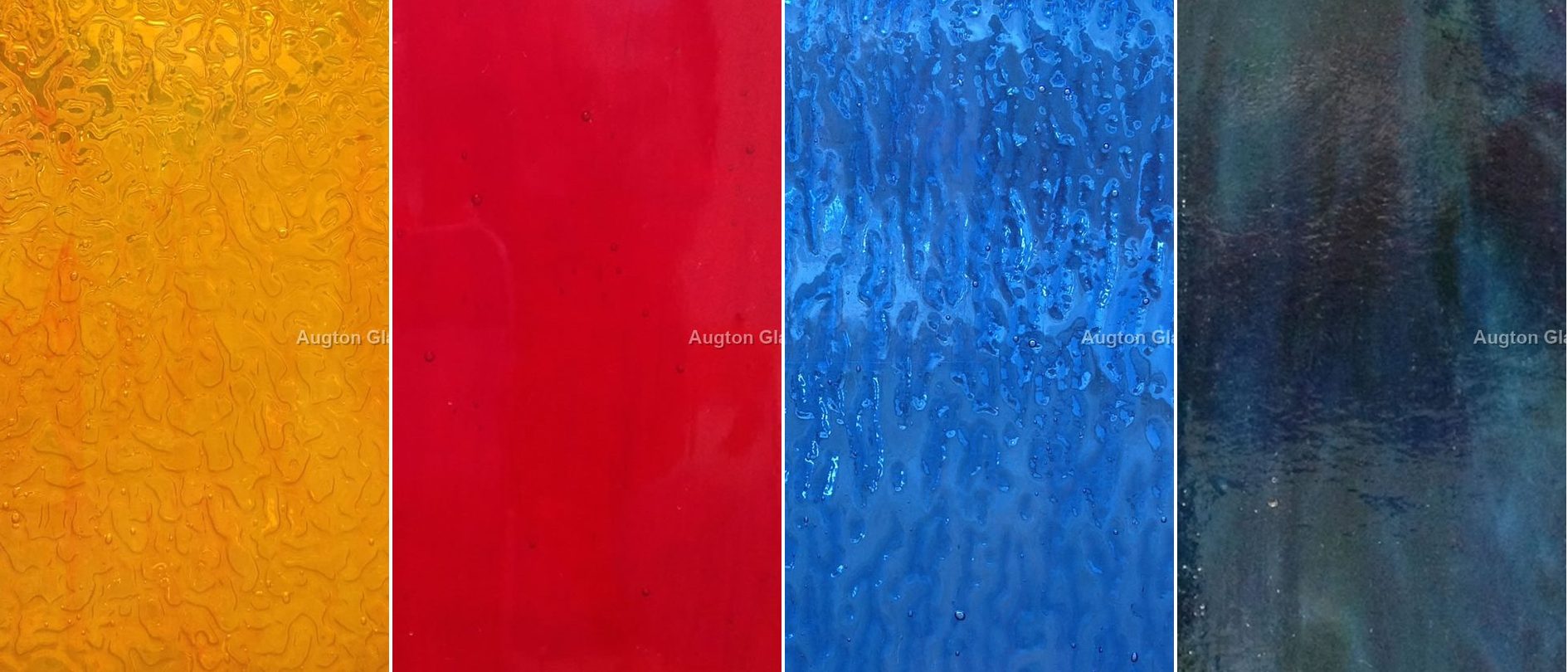
- Texture is rolled into the sheet while the glass is still hot — it is part of the body, adds no thickness variation problems, and scatters light without coating or etching.
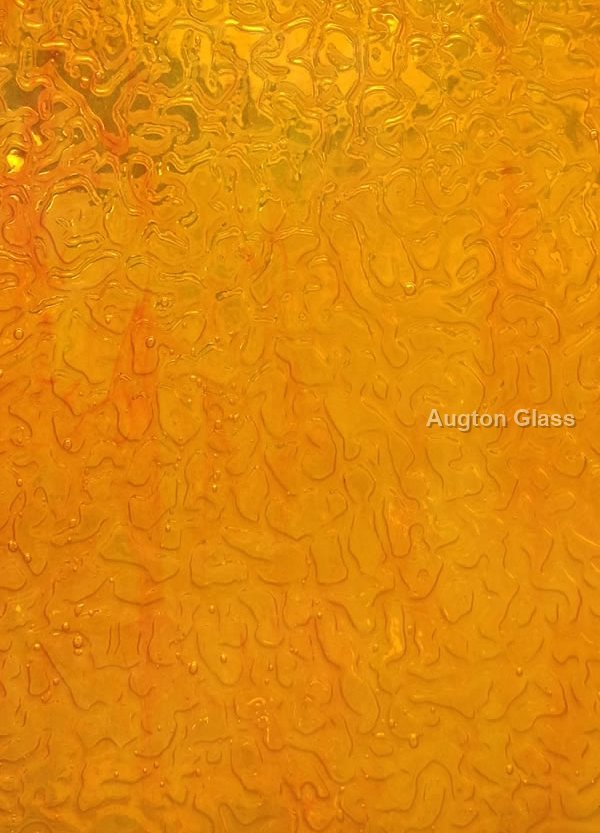
- Cathedral (transparent) glass gives the brightest, truest color transmission; stipple glass diffuses into a soft even glow; water-glass and ripple textures add living movement between the two extremes.
- A practical transparency ladder for privacy: cathedral → transparent textured → stipple → opalescent, from clear silhouettes to fully hidden.
- All sheets stay within a consistent 2–3 mm and score and cut cleanly — texture changes the surface, not the workability.
- Mixing textures in one panel is standard practice: transparent fields for light, textured or stipple sections for privacy and shading.
Texture Is Made While the Glass Is Still Hot
Stained glass texture is not applied afterward — it is rolled into the surface as the sheet passes through the rollers while still molten. Water-glass, ripple, granite and stipple surfaces are all formed this way, which is why the relief is sharp, permanent and identical in character across a production batch.
Because the texture is in the glass itself, it cannot peel, scratch off or yellow the way applied films do, and it survives the same decades of sunlight and cleaning as the color it carries. The surface scatters light optically: a textured sheet diffuses whatever passes through it, softening both the view and the shadows it casts.
In the stained glass range, the main surfaces are cathedral (flat transparent), water-glass, ripple and stipple — all available across the full 60+ color palette.


Cathedral Glass: Pure Light and True Color
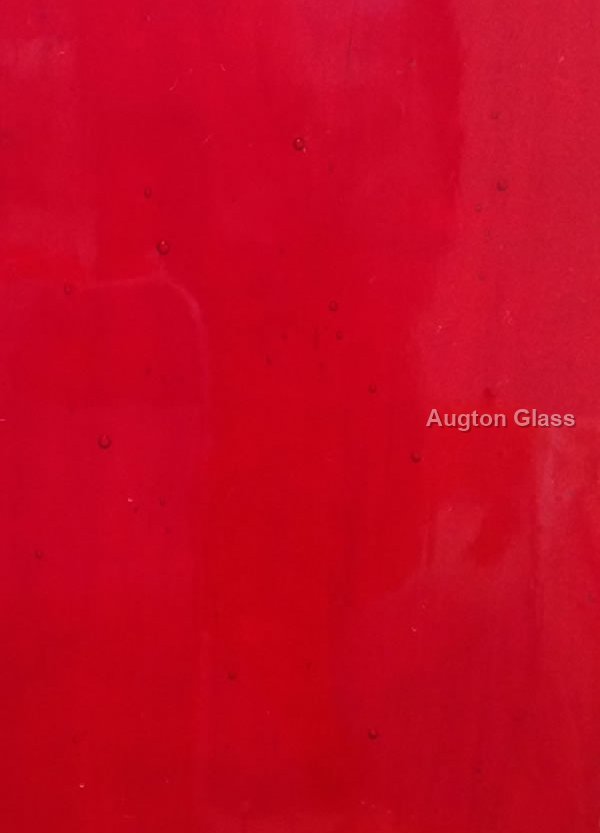
Cathedral glass is the classic transparent sheet: through-body color, flat surface, nothing between the viewer and the light. When backlit, it glows at full saturation — this is the glass of traditional church windows, suncatchers and any design whose whole point is colored light.
Its weakness is the reverse of its strength: it hides nothing. Silhouettes, wiring and unattractive backgrounds show straight through, which is why real-world panels almost never use cathedral glass alone.
For buyers, transparent stained glass is the anchor of most mixed panels — the bright field against which opalescent and textured sections create contrast and depth.
Water-Glass and Ripple: The Two Workhorse Textures
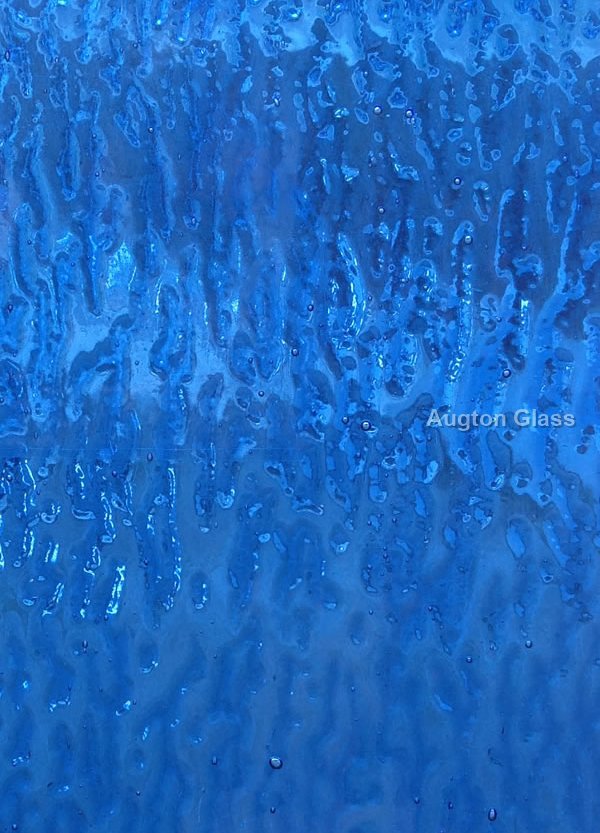
Water-glass carries fine, parallel vertical striations — the look of light moving on water. It is the single most useful texture in decorative work: it obscures just enough to soften what is behind the glass, adds gentle movement, and its linear grain makes cut pieces look taller and more elegant.
Ripple is water-glass with more drama — deeper, wave-like relief that catches and throws light in bands. It reads best in larger pieces and feature sections rather than small lamp details, where its pattern can overwhelm the color.
Both textures are rolled into the sheet before annealing, so the pattern is crisp and repeatable. Grain direction can be matched across sheets in one panel — tell us at order stage and the mill keeps the sheets oriented consistently through packing.
Stipple Glass: The Soft-Glow Specialist
Stipple glass carries a fine granular surface that scatters light into a soft, even glow — no hot spots, no sharp reflections. It is the traditional choice for lamp bases and shaded sections of Tiffany work, where a hard cathedral highlight would look artificial next to opalescent neighbors.
Because it diffuses so evenly, stipple is also the discreet privacy option in stained glass design: it breaks up silhouettes completely while still passing generous light. In restaurant and hotel panels it delivers ambiance without glaring reflections.
For shades that transition from bright base to glowing shade sections, pairs of stipple glass and opalescent glass blend almost seamlessly — a combination Tiffany workshops have used for a century.
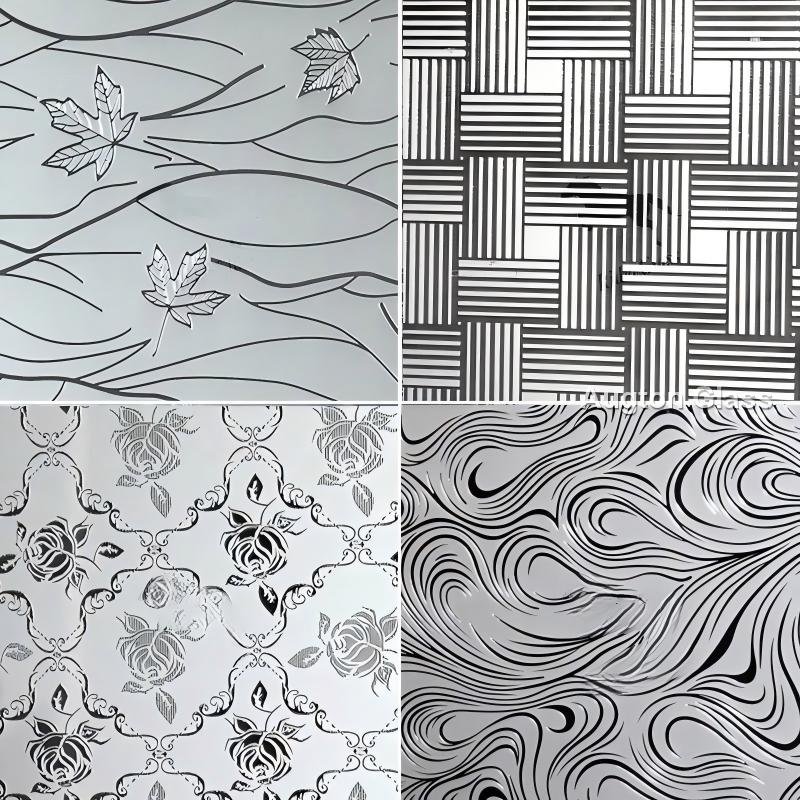
The Transparency Ladder: Matching Privacy to Light
Most architectural panels live at levels 2–3: enough light transmission for daylighting, enough diffusion for comfort. Lamp work moves between levels 1 and 4 within a single shade — bright transparent accents, glowing stipple midsections, opaque opalescent tops.
| Level | Sheet type | What a viewer sees |
|---|---|---|
| 1 — Full view | Cathedral / transparent | Clear silhouettes through glowing color |
| 2 — Softened | Transparent textured | Shapes and movement, detail broken up |
| 3 — Diffused | Stipple | Light and shadow only, no recognizable shapes |
| 4 — Hidden | Opalescent | Nothing behind the glass — pure color |
Mixing Textures in One Panel
The panels that win commissions almost always mix surfaces. A restaurant feature wall might be 70% transparent textured field for daylight, 20% mottled opalescent for organic color, and 10% goldstone or fracture accents for sparkle — all cut from 2–3 mm sheets and assembled with the same foil or came.
Two practical rules keep mixed panels coherent. First, limit the palette: three effect families plus one accent is usually the ceiling before a panel starts to look busy. Second, keep texture direction consistent — vertical water-glass grain throughout a window reads as intentional; random grain directions read as leftovers.
Send us the cartoon or design intent and we will pre-match texture direction and grain across the sheets in your order, so the panel assembles the way it was drawn.
Specs, Cutting and Color Consistency
Every sheet in this guide — textured, transparent or stipple — is produced at a consistent 2–3 mm and cuts with standard carbide wheels. Textured surfaces score on the flat side and break cleanly; stipple grinds smoothly for copper-foil edging.
Color is controlled at the batch level. Sheets within one order carry the same tone, and for repeat orders we lock the color recipe so this quarter’s production matches last quarter’s. Physical color chips are approved before production — never rely on screen colors for stained glass.
For full range planning across both color and surface, our stained and opalescent glass guide covers the effect families this article pairs with textures.
Packing, Freight and Reordering
Textured sheets pack flat with interleaved paper in seaworthy crates — textured faces are separated with paper rated not to press-mark the relief, and crate stacks are kept short so no sheet loads the one beneath. Orders ship container-optimized with color codes marked on the crate exterior.
Reorders are the quiet advantage of working with one mill: the color recipe, texture roller set and grain orientation of your first order are all on file, so a repeat PO ships with the same look without new sampling.
Frequently Asked Questions
Does texture make stained glass harder to cut?
No. You score on the flat side and break normally. All our textured and stipple sheets are the same consistent 2–3 mm and cut cleanly with standard equipment.
Which surface gives the most privacy while keeping daylight?
Stipple. Its granular surface breaks up silhouettes completely while transmitting generous, evenly diffused light — the level-3 sweet spot on the transparency ladder.
Can water-glass grain run in a specific direction?
Yes. Grain direction follows the sheet orientation, and we match grain direction across sheets in one panel when requested at order stage.
What is the difference between water-glass and ripple?
Water-glass is fine parallel striation — subtle and vertical; ripple is deeper wave-like relief that throws light in visible bands. Water-glass suits small cut pieces, ripple suits larger feature sections.
Is cathedral glass just colored window glass?
It is through-body colored sheet glass — the color is in the batch, not a coating — so it glows at full saturation when backlit and never fades, unlike tinted coated float.
Can I mix textures from different suppliers?
You can, but tone and texture character rarely match across mills. Ordering all surfaces from one range keeps the palette and relief consistent across a panel or product line.
How are textured sheets packed?
Flat and paper-interleaved in seaworthy crates, with paper rated not to press-mark the relief and crates marked by color code for direct unpacking.
Do repeat orders match the first shipment?
Yes. Color recipe, roller set and grain orientation are on file, and repeat production is checked against retained samples from your first order.
The Bottom Line
Tell us the panel design, privacy level and colors you need — we will map your project to the right cathedral, water-glass or stipple surfaces and quote by sheet.
Request a Quote →