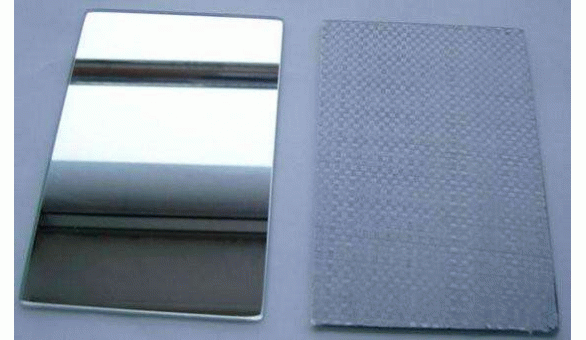
Mirror Buyer's Guide: Silver, Aluminum, Copper-Free, Epoxy and Safety Mirrors
Not all mirrors age the same. The backing chemistry decides how long a mirror survives steam, salt air and cleaning spray — here is how to match mirror grade to environment and budget.

- A mirror is chemistry: silver for image quality, aluminum for budget, copper-free multi-layer systems for steam, pools and coastal air.
- Edge corrosion is the failure mode that matters — polished edges plus neutral-cure silicone sealing at installation prevent most black-edge complaints.
- Safety film-backed mirrors are the required grade for gyms, studios, changing rooms and anywhere a person can fall against the glass.
- Standard silver and aluminum mirrors cannot be tempered; use film-backed safety mirror where impact or fragmentation is a concern.
- Clean by spraying the cloth, never the mirror — moisture running behind the frame is how backing failure starts.
What Actually Makes a Mirror
A mirror is float glass plus a reflective metal layer plus protective paint. The differences between "cheap mirror" and "premium mirror" are almost entirely in the chemistry of that backing — how many protective layers, how much copper, and how well the edge is sealed. Choose the right grade and a mirror lasts decades; choose wrong and black-edge corrosion appears within a wet season or two.
Silver Mirror: The Reference Standard
Silver mirror is made by depositing metallic silver on glass, then protecting it with copper and two coats of backing paint. It delivers the highest reflectivity (~95%+), true color rendering and the deepest perceived image quality — which is why it remains the default for bathrooms, bedrooms, retail fitting rooms and dance studios. Standard silver mirrors handle normal indoor humidity well; the failure mode is moisture penetrating the edge, which shows as black spotting starting at corners.

Aluminum Mirror: The Budget Workhorse
Aluminum mirror replaces the silver chemistry with vacuum-deposited aluminum plus one or two paint coats. Reflectivity runs about 5-8% lower with a slightly cooler tone, but the process is cheaper and the aluminum layer itself is inherently more corrosion-tolerant in damp air. It is the sensible choice for furniture backs, wardrobe doors, decorative frames and price-sensitive volume orders where absolute image fidelity is not critical.
Copper-Free and Double-Coated: Built for Wet Rooms
Copper-free mirror removes the copper layer entirely and replaces the paint system with multiple layers of specialized protective coatings. Without copper, the electrochemical corrosion that drives edge black-out slows dramatically — copper-free mirrors typically pass CASS tests (accelerated salt-spray) several times longer than standard silver mirrors. This is the grade to specify for hotel bathrooms, spa and pool surroundings, coastal projects and anywhere mirrors meet steam daily.

Epoxy and Safety Mirrors: When the Backing Must Do More
Epoxy mirror adds a tough epoxy resin protective layer for demanding environments — gym walls, wet-area ceilings, and installations where cleaning chemicals are aggressive. Safety mirror bonds a PE or CAT II film to the back so that if the glass ever breaks, fragments stay attached rather than scattering — required or strongly recommended for public changing rooms, gyms, dance studios, elevators and kids' spaces.
Choosing by Environment
| Environment | Recommended grade | Why |
|---|---|---|
| Dry bedroom / hallway | Aluminum mirror | Best value; corrosion risk low |
| Standard residential bathroom | Silver mirror | Top image quality; vent the room properly |
| Hotel / spa / pool / coastal | Copper-free mirror | Multi-layer protection survives steam and salt |
| Gym / dance studio | Safety mirror with film | Impact retention per safety norms |
| Furniture backs / wardrobe doors | Aluminum mirror or epoxy | Hidden application, cost-effective |
Details Worth Specifying
- Edges: polished (flat or pencil) edges seal better than raw cut edges — the edge is where mirrors fail first.
- Backing paint color: grey-green standard; white paint is available where the mirror sits against light cabinetry.
- Thickness: 4 mm suits most wall mirrors; 5-6 mm for large frames and gym walls to avoid image flex.
- For wireless bathrooms, consider our LED mirror range built on copper-free substrates.
Why Copper-Free Resists Corrosion — In Plain Numbers
In a conventional silver mirror, the copper layer between silver and paint exists to protect the silver electrochemically — but when moisture and cleaning chemicals reach it, the copper itself becomes the corrosion pathway, producing the familiar black spotting. Copper-free systems remove that pathway and compensate with two or more engineered protective paint layers. In accelerated testing — CASS salt-spray cycles and humidity chamber exposure — copper-free mirrors typically endure two to three times the exposure of standard silver before first corrosion signs appear. For a hotel bathroom cleaned twice daily, that difference decides whether the mirror looks new after five years or is being replaced.
Coating Build-Up Compared
| Layer | Silver mirror | Aluminum mirror | Copper-free mirror |
|---|---|---|---|
| Reflective metal | Chemically deposited silver | Vacuum-deposited aluminum | Silver deposit |
| Intermediate protection | Copper film | None | None (removed by design) |
| Backing paint | Two coats, standard | One or two coats | Two or more specialized protective coats |
| Reflectivity | ~95%+, true color | ~88-90%, slightly cool tone | ~95%+ |
| Wet-room suitability | Moderate with good ventilation | Dry interiors only | Excellent — hotels, spas, coastal |
Mounting and Sealing: Where Most Failures Actually Start
- Mount on a dry, cured wall — never against fresh plaster, new render or a damp substrate that will keep feeding moisture to the backing.
- Fix with mirror clips or a dedicated neutral-cure mirror adhesive in vertical beads; solvent-based adhesives attack backing paint within months.
- Keep a small ventilation gap at top and bottom where the design allows, so condensed moisture can escape from behind the mirror.
- After fixing, run a thin bead of neutral-cure silicone along all four edges, tooling it so it fully seals edge and backing paint.
- Brief the cleaning crew: spray the cloth, wipe the face, never pressure-wash or let cleaner pool in the bottom edge.
The single most common installation error we see is sealing edges with an aggressive or solvent-bearing silicone, or skipping the edge seal entirely because the mirror 'looked sealed' in its frame. Both undo the coating chemistry the buyer paid for — the grade of mirror cannot survive a bad edge detail.
Volume Projects: Consistency, Batches and Documents
For hotel or multi-tower orders, consistency matters as much as grade. Backing paint tone, silvering bath conditions and cut size all drift slightly between production runs, so we batch a full project's mirrors in one campaign where possible and hold the remainder in stock to match. Ask for: the batch test summary for corrosion resistance, the safety-film certificate where film-backed panels are specified, and a retained sample from your batch so any future re-order can be compared physically rather than by memory.
Every copper-free batch we ship goes through humidity and CASS exposure sampling. A mirror that fails in year two is our freight cost and your reputation — we would rather both survive.
Decorative Variants: Beveled, Antique and Etched
Beyond plain silvering, three finishes dominate hospitality and feature-wall work. Beveling cuts and polishes a 15-30 mm angled facet around the edge, catching light along the frame line — standard on dressing and hallway mirrors, usually on 5-6 mm glass so the facet has depth. Antique mirror is made by selectively disturbing the silvering with acid and tinting, producing clouded, smoky or gold-toned panels where no two pieces match — batch-order enough panels for the whole wall in one run. Acid-etched and sandblasted decoration adds logos, patterns or gradients to the mirror face; the etch sits in the glass itself and outlasts any printed film.

Frequently Asked Questions
Why is my mirror turning black at the edges?
Edge corrosion: moisture has reached the metal backing through an unsealed edge or backing defect. Prevention: choose copper-free or double-coated grade for humid rooms, order polished edges, and seal the edge with neutral-cure silicone after installation.
Is a copper-free mirror worth the extra cost?
For bathrooms, pools, coastal sites and hotels — yes, unambiguously. The multi-layer protective system typically triples the time before corrosion appears, which dwarfs the modest price difference over a fixture's life.
Can mirrors be tempered?
Only special temperable mirror grades, which use a heat-resistant coating system. Standard silver and aluminum mirrors cannot be tempered — for safety-rated mirror locations use film-backed safety mirror instead.
What is the maximum mirror size you can produce?
Our silvering lines handle sheets up to approximately 2440 × 3660 mm; large gym and studio mirrors are typically supplied in 6 mm with safety film and polished edges, seam-mounted.
Do you offer custom shapes?
Yes — arches, rounds, ovals and irregular CNC-cut shapes in all mirror grades, with polished or beveled edges. Send a drawing (DXF or PDF with dimensions) for a quote.
How should I clean mirrors without damaging the backing?
Spray a mild, non-ammonia glass cleaner onto the cloth — never directly onto the mirror — and wipe the face. Keep liquids away from edges and the bottom rail where moisture can wick behind the paint. Abrasive powders and razor blades scratch the surface; aggressive solvents can attack backing paint at exposed spots.
What is the minimum order and lead time for custom mirror sizes?
Standard sheet stock can be cut to size from small quantities, including single crates for trial orders. Custom shapes are CNC-cut from your DXF or dimensioned PDF, typically shipping in 10-15 days plus transit. Large projects are batched for backing-paint and silvering consistency.
Are mirrors available with anti-fog or heated backing?
Yes — electric heating pads or full heated backing can be applied behind the mirror during production, and our LED mirror range integrates heating, lighting and copper-free substrates as a single unit for hotel and residential bathrooms.
Will a very large mirror distort the reflection?
Image distortion comes from glass flatness and the mounting surface, not from the coating. Use 6 mm glass for panels above about 1.5 m wide, insist on a flat, plumb backing wall, and mount on full-contact pads rather than over bumps in plaster — a mirror fixed to an uneven wall takes the wall's shape.
Do you supply mirrors with safety film already applied?
Yes — PE or CAT II safety film is factory-applied to the back of any grade, most commonly on gym, studio, elevator and changing-room orders where fragmentation rules apply. Film-backed panels ship with the film specification documented for your compliance file.
The Bottom Line
Tell us where the mirrors will live — bathroom, gym, furniture or coastal project — and we will recommend the exact grade with samples within 24 hours.
Request a Quote →